
The Texas Education Freedom Act: Empowering Parents and Students
Texas Education Freedom Act Andrea Elliott February 10, 2026
Texas Education Freedom Act Andrea Elliott February 10, 2026
As a parent myself, and a brand new Grandparent, I am excited about the new educational options that our children have. The educational landscape in Texas underwent a paradigm shift on February 4, 2026, with the operational launch of the Texas Education Freedom Accounts (TEFA) program. Authorized under Senate Bill 2, this legislation has moved beyond theory into a market reality that is already outpacing projections. This has given parents a long awaited choice.
In the first 24 hours of the enrollment portal opening, the Comptroller’s office reported a record-breaking 42,000+ applications, a number that surged to over 46,000 by the morning of February 10, 2026. This velocity of subscribing nearly 50% of the program's capacity in 48 hours, signals a massive latent demand that will inevitably ripple into residential real estate economics. We are witnessing a significant shift from "Institution-Based" valuation (where your home value is tied to the school down the street) to "Student-Portable" valuation (where the funding follows the child, regardless of zip code).
Education Freedom Accounts (EFA's) are state-funded, student-centric instruments designed to decouple educational funding from physical school districts. For the 2026–2027 academic year, the Texas Education Agency (TEA) has set the standard award amount at $10,474 per student, additional funds for children with special needs, must meet requirements.
This is not a voucher in the traditional sense; it is a restricted-use savings account administered through the Odyssey platform. Instead of funds being routed automatically to a local Independent School District (ISD), parents control this $10,474 allocation, directing it toward approved vendors for tuition, therapy, or curriculum, that every student could benefit from. This effectively creates a "portable premium" for every qualifying family, altering the affordability calculation for private education in markets like Houston and the Texas Hill Country.
The program is technically open to "all Texas children," the $1 billion funding cap for the 2026 biennium has necessitated a strict prioritization system. The program is not first-come, first-served; it operates via a lottery system once the application window closes on March 17, 2026.
The Priority "Allocation":
Tier 1: Students with disabilities (up to $30,000 funding) from households <500% Federal Poverty Level (FPL).
Tier 2: Households <200% FPL.
Tier 3: Households 200%-500% FPL.
Tier 4: Households >500% FPL (Capped at 20% of total funds).
The Workflow:
Application: Submitted via the Odyssey portal between Feb 4 - March 17, 2026.
Funding: If selected, $10,474 (or up to $30,000 for Special Needs) is deposited.
Approved Expenses:
Private school tuition (accredited schools only).
Educational therapies (Speech, OT, PT).
Textbooks, uniforms, and transportation fees.
Note: Computer hardware is capped at 10% of the total award.
The TEFA structure offers distinct advantages that go beyond simple tuition assistance, particularly for the "Busy Professional" demographic we serve.
For families in New Braunfels-Copper Ridge and Vintage Oaks or Houston-Memorial Villages, this allows for a "hybrid" approach. You are no longer forced to choose between a rigid public schedule and a full private commute. EFAs fund "micro-schools" and bespoke tutoring arrangements, allowing for a lifestyle-centric education model.
With a $10,474 floor, the EFA acts as a significant subsidy. In the Houston private market, this covers a significant amount of tuition at many parochial schools or offsets some of the cost of elite preparatory academies. For families with multiple children, this creates tens of thousands of dollars in annual liquidity that was previously trapped in property taxes.
The "Geography Trap" is removed. Families in Copper Ridge or Vintage Oaks (Comal County) historically faced long commutes to top-rated schools. Now, the funding supports local, private options or high-level homeschooling, validating the decision to buy "further out" for better views and acreage without sacrificing educational quality.
The Odyssey platform provides a transparent audit trail. Parents act as the "CFO" of their child's education, ensuring that every dollar ($10,474/year per child) creates a measurable return on investment (ROI) regarding the child's development, rather than vanishing into a general administrative fund.
The "Fiscal Cliff" Risk: A primary concern is the "Enrollment Burn Rate" for public districts. When a student leaves Houston ISD, New Braunfels or Comal ISD, the district loses the Average Daily Attendance (ADA) funding associated with that student.
My Thoughts: Will require close monitoring. If a neighborhood school loses 15% of its enrollment, it triggers "Right-Sizing" discussions (consolidation/closure). This is a critical metric for property owners in "Zoned-Dependent" neighborhoods.
Accountability: Unlike public schools, private schools are not required to administer the STAAR test, though they must administer a norm-referenced assessment. It can be argued that this obscures data; proponents argue the ultimate accountability is the parent's ability to withdraw funds and move them elsewhere.
The 2026 launch is just the "First Phase." With 46,000+ applications in just 48 hours, the demand has already outstripped the $1 billion cap.
My Prediction: Expect the 2027 Legislative Session to aggressively expand the funding cap to meet this waitlist.
Federal Integration Could be Next: Texas has signaled intent to opt-in to federal tax credit programs in 2027, which could allow families to "stack" federal benefits on top of TEFA, potentially raising the monetary power to $13,000+ per student.
Q1: How many people have applied as of today? A1: As of the morning of February 10, 2026, though I don't know the exact number, over 46,000+ applications have been submitted, shattering national records for a program launch.
Q2: What is the exact dollar amount my child will receive? A2: The TEA has set the 2026-27 amount at $10,474 for general students. Students with special needs/disabilities may receive up to $30,000 based on their IEP requirements. This is also putting school districts in a quandary, they do not have the staff to administer IEP's in such a short period.
Q3: Is this "First-Come, First-Served"? A3: No. Do not panic if you did not apply on Feb 4th. The window remains open until March 17, 2026. All applications received by that date will be entered into the stratified lottery system.
Q4: Can I use this for a school in New Braunfels or West University? A4: Yes, provided the school is accredited and registered with the state Comptroller. However, be aware of "Tuition Inflation." I advise clients to lock in tuition rates as soon as possible, as schools may raise prices or need to offset prices in response to the new subsidies.
Q5: What if I make over $165,000/year (Tier 4)? A5: You are eligible, but funds for your tier are capped at 20% of the total budget. Given the 46,000+ applications, competition in your tier will be fierce.
The "Forensic Audit"
While TEFA focuses on the portability of funds, real estate values are historically anchored to the permanence of the institution your home is located. This will bring a new discussion and to look at the physical impact on your neighborhood’s infrastructure should these funding shifts lead to "Right-Sizing" or facility closures.
Q6: If my neighborhood school closes, does my property tax bill go down? A6: "My View": Not necessarily. In Texas, school districts often use "Recapture"(Robin Hood) to manage funding. If enrollment drops, the "property wealth per student" actually increases, which can trigger higher recapture payments to the state. You could end up paying the same, or more, in taxes while losing the primary amenity that justifies your home’s premium. This will be an area that I will be closely watching.
Q7: Can a "School Choice" environment actually increase my home value? A7: "Absolutely": Yes it could, if the neighborhood shifts from being "Zoned-Dependent" to "Lifestyle-Dependent."
Houston Case Study: In The Heights or Garden Oaks, where buyers often love the homes but struggle with specific primary/middle/high school zones, TEFA acts as a "Market Maker." It allows buyers to purchase the $900K bungalow and use the $10k subsidy for private school, effectively increasing demand for these "Lifestyle" neighborhoods.
Q8: How do I know if my specific neighborhood school could be at risk of closure under TEFA? A8: I'll Need to Provide a Strategic Audit: This will require careful review to monitor the "Enrollment Burn Rate." When a school loses more than 15% of its student body over three years to Education Freedom Accounts, the district typically begins a "Right-Sizing" analysis. This is the "warning shot" for homeowners to evaluate their exit or hold strategy.
Q9: Does "School Choice" affect homes without school-aged children? A9: MY POV: Absolutely. Approximately 25% of all homebuyers list "Top-Rated Schools" as a non-negotiable search filter, even if they don’t have kids. When a neighborhood loses its school anchor, you aren't just losing a building; you are losing approximately 25% of your potential buyer pool, which directly impacts your Days on Market (DOM) and final sale price.
Q10: What happens to the physical building if a neighborhood school closes? A10: Hidden Risk: This is the "Blight vs. Benefit" pivot. A vacant building can lead to a 5%-10% equity ceiling if it falls into disrepair. However, if the site is designated for "Adaptive Reuse"-such as upscale property with mixed-use or park-like can become a catalyst for the next wave of neighborhood gentrification.
The landscape of Texas education has officially shifted from a "Zoned System" to a "Choice Market." As the first round of Texas Education Freedom Account (TEFA) applications floods in, surpassing 46,000+ in just 48 hours, the traditional link between your residential zip code and your child’s school is decoupling and bringing with it a new way to look at your properties value and school districts.
For the modern homeowner, this is more than a policy change, it's a Valuation Trigger.
In premium corridors from the New Braunfels Hill Country (Vintage Oaks, Copper Ridge) to the Houston's Memorial Villages, we are already tracking how shifting enrollment patterns could affect neighborhood liquidity. I'm monitoring this new horizon and will provide updates for our local communities, should we be facing enrollment declines or "right-sizing," your home’s premium may be at risk and deserves a conversation. Conversely, if you are staying in your home to leverage these new funding opportunities, your property’s future value may have just increased.
The Strategic Question: Has this new educational flexibility provoked a need to reassess your home's current market position, this is a great question, that is just too early to answer. Whether you are looking to "Future-Proof" your current residence or are concerned about localized school impacts making a move necessary, do not navigate this transition without a Decision Matrix.
Contact me today to schedule a Private Portfolio Consultation or discussion. I'll run a 3-step audit of your property against 2026 enrollment forecasts or FEMA/Risk data to ensure your equity remains protected.
Whether you are looking to capitalize on the diversifying Greater Houston Metropolitan Statistical Area (MSA) or securing a legacy estate in the New Braunfels Hill Country Area, you need a partner who understands the "flight to quality" and the micro-market nuances that generic reports miss.
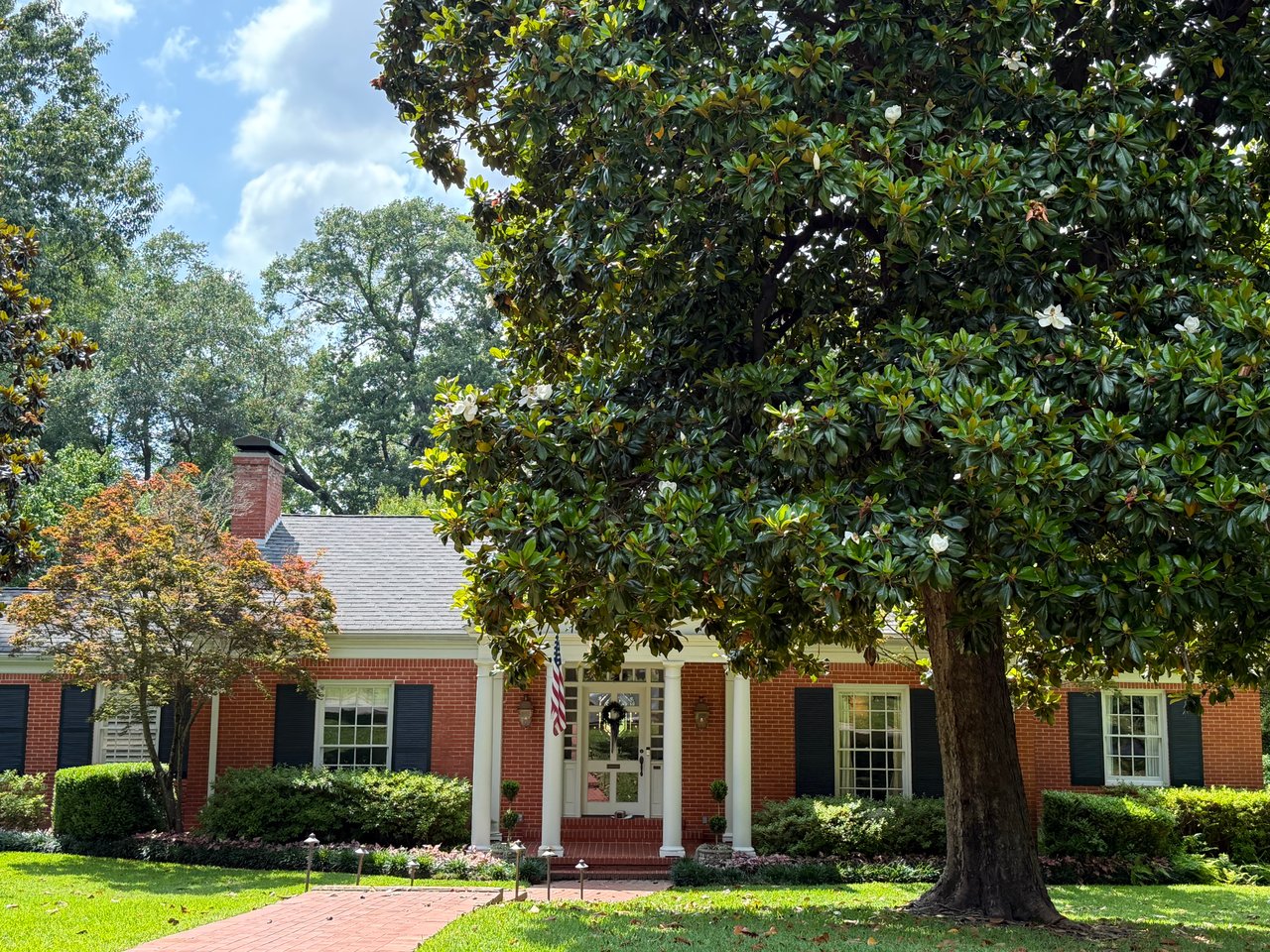
Disclaimer: A. Elliott Advisors Real Estate (AEARE), including Broker/Owner Andrea Elliott, is a licensed Real Estate Broker, is not a CPA or Attorney. This is strictly my opinion. The information provided above regarding the Texas Education Freedom Act (Senate Bill 2) and specific application statistics is based on data available as of February 10, 2026. Program funding and eligibility are subject to legislative change and lottery results. Consult a qualified tax professional or education consultant for your specific situation. Fair Housing Statement: AEARE is committed to the principles of the Fair Housing Act, ensuring equal opportunity for all. Photo utilized in this blog was AI generated and is not real.
Stay up to date on the latest real estate trends.

New Braunfels Market
The Federal Reserve held rates steady. Mortgage rates went up anyway. Why that happened, what a jumbo buyer in New Braunfels actually pays, and how it changes the conv… Read more
Texas Education Freedom Act
Unpacking Education Freedom Accounts and How They Transform Learning Opportunities in Texas

Trump Account
A Financial Guide for Parents in The Villages and Vintage Oaks

Market Insights & Reports
A 2025 Retrospective and 2026 Strategic Outlook for the Houston & New Braunfels MSAs.
Market Analysis
The rates have dropped, but a new supply crisis is looming. Here is the sophisticated take on this week’s massive market shift.

The AEARE Estate & Capital Brief
Why a $2.5M Allocation in Houston Outperforms Austin and Dallas in Asset Value & ROI

Local Lifestyle
Why Arthur Brooks, Fly Fishing, and NICU Rocking Chairs Hold the Key to a Joyful Season

The $500,000 Question
Expert Strategic Counsel on Capital Management, Tax Risk, and The Exclusive $1M+ Buyer Profile in Comal County
The American Dream Now Tops $5 Million
How rising costs redefine the American Dream — and why strategic presentation, design, and storytelling matter more than ever for luxury sellers in New Braunfels and H… Read more
Whether you’re buying, selling, or investing, working with Andréa Elliott means having a reliable partner by your side. Let her expertise and passion guide you to your next big success in Texas real estate.